


The Connection Between Hip and Knee Pain
Did you know that for a lot of people, their knee pain is not actually due to a problem with the knee, but one with the hip? At Amber Hill Therapy Centers, we frequently observe that a problem originating in the hip can be first felt as knee pain and vice versa.
You might wonder how this is possible. The answer lies in what’s known as the kinetic chain, where the hip and knee joints work together. The interconnection means that an imbalance or dysfunction in one joint can lead to compensation and pain in the other. The good news is our therapists can help you figure out the source of your pain and, more importantly, guide you back to health.
To move towards a healthier, active life, we recommend you consult with one of our physical therapists as soon as possible!


Your Guide to Recognizing the Signs and Symptoms of Hip and Knee Pain
At Amber Hill Therapy Centers, we believe in a holistic approach to healing. As musculoskeletal experts, we are trained to pinpoint the root cause of your condition, differentiate between hip and knee pain, and develop a plan that addresses the whole person, not just the symptom.
The Telltale Signs of Hip Pain
- Localized Discomfort and Stiffness: Hip pain generally starts as a localized discomfort in the groin area, often accompanied by stiffness restricting the range of motion. As the severity worsens, this pain can sometimes extend to the thigh and even the knee.
- Morning Stiffness: One of the most commonly reported symptoms is morning stiffness, which typically eases as the day progresses.
- Difficulty in Performing Daily Activities: Individuals with hip pain often find it challenging to bend over to tie shoes or pick up objects from the floor. This pain can intensify during movements like getting up from a seated position or walking uphill.

Classic Indicators of Knee Pain
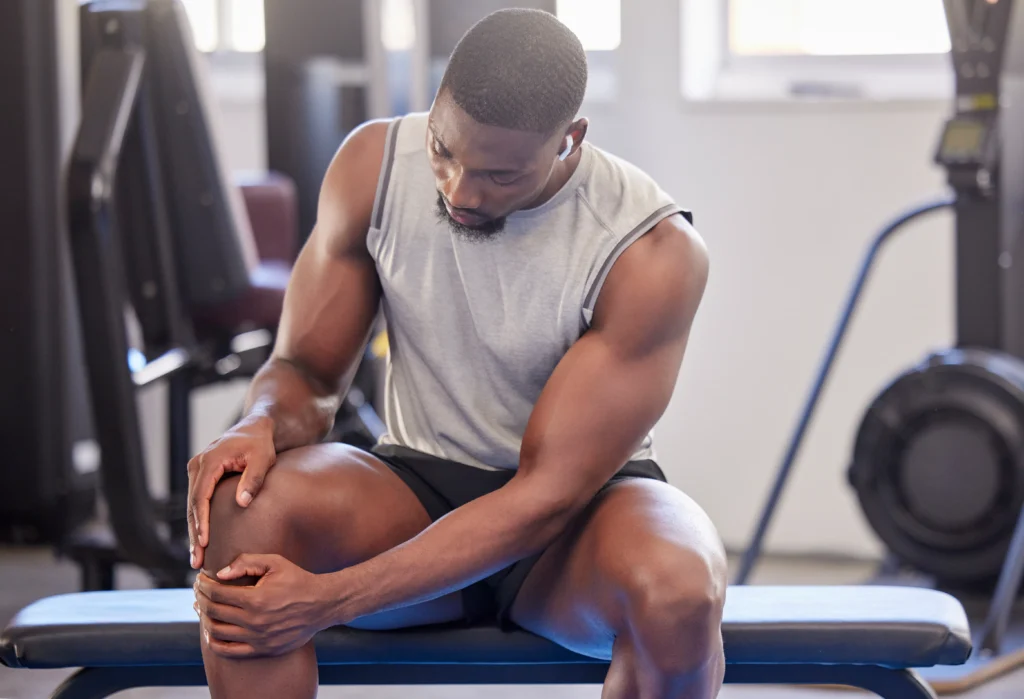
- Localized Pain and Swelling: A primary indicator of knee issues is localized pain, often accompanied by swelling. This can be especially noticeable after prolonged periods of activity.
- Stiffness and Reduced Range of Motion: Another hallmark of knee pain is stiffness, which often restricts the knee’s range of motion.
- Popping or Crunching Noises: Experiencing popping or crunching noises during knee movement is a sign that shouldn’t be ignored, as these sounds often signify underlying knee issues.
- Difficulty in Bearing Weight: A large number of individuals with knee pain report difficulty bearing weight on the affected knee. This is often described as a feeling of weakness or instability, making activities such as climbing stairs or even simple walking difficult.
While interconnected, the hip and knee are distinct structures with unique roles in our body’s movement and different responsibilities. Understanding these differences is vital in diagnosing and treating pain effectively. This is where the expertise of our physical therapists can help!
Navigating the Path to Recovery with Amber Hill Therapy Centers
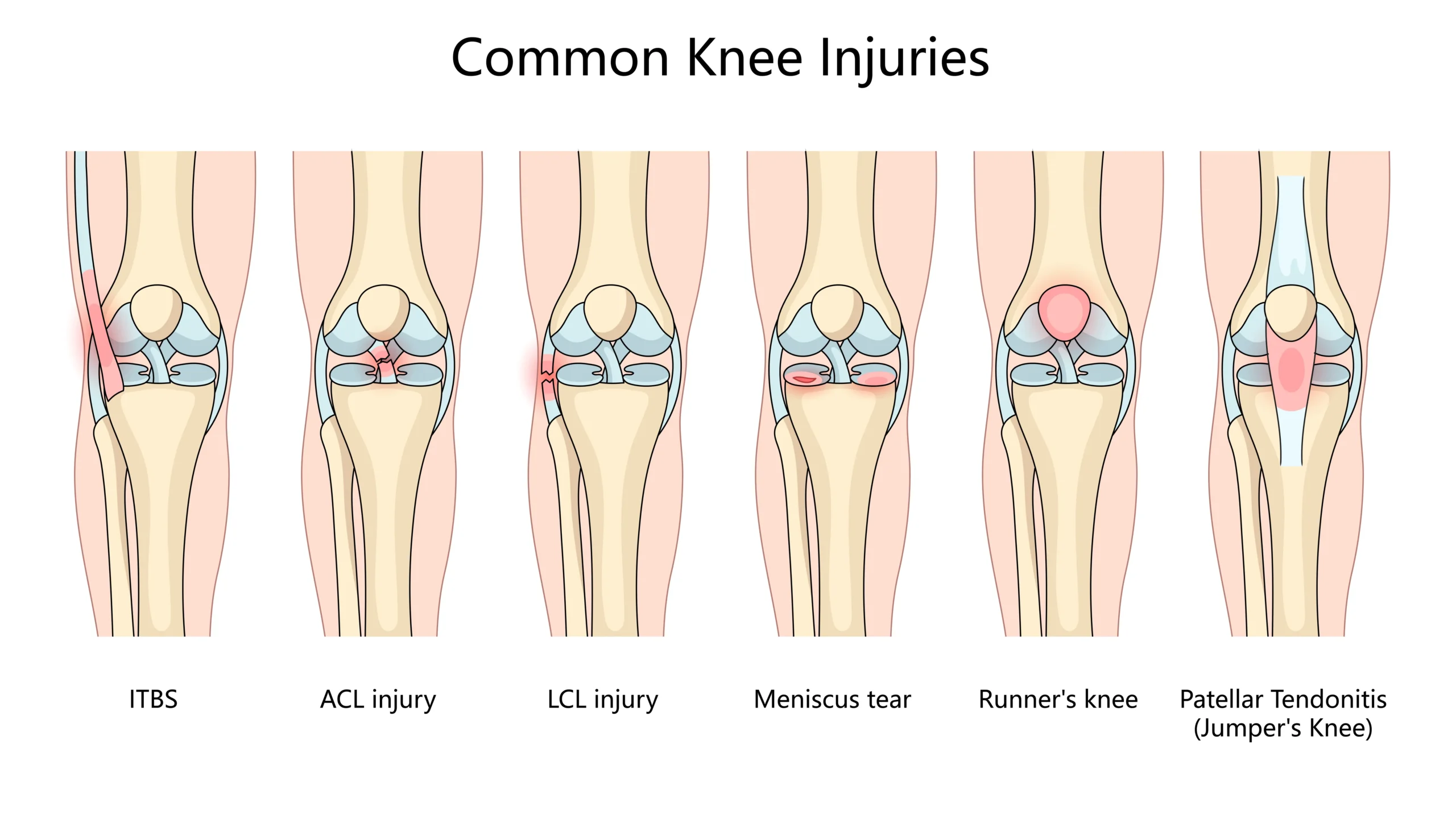
At Amber Hill Therapy Centers, our physical therapists will conduct a comprehensive evaluation, and distinguish whether you’re dealing with an issue in your hip, knee, or both.
After completing the evaluation, we’ll design a program focusing on the actionable steps you can take to ensure long-term relief and prevention of future injuries, including the following:
- Tailored Therapeutic Exercises: Our therapists will provide you with stretching and strengthening exercises to help restore your mobility and function. For example, eccentric training focuses on elongating a muscle under tension, proving particularly effective in strengthening muscles and improving mobility.
- Neuromuscular Re-education: This involves using exercises and manual techniques to restore normal muscle function and movement patterns. These techniques are especially effective in reducing pain and enhancing function, especially in individuals with hip and knee pain.
Our therapists go beyond the surface, digging deep into your symptoms to identify the underlying issues and determine the true origin of your pain, whether the hip, the knee, or both. Our goal is to build a program that helps you get back to living your best life!
Sources: https://pubmed.ncbi.nlm.nih.gov/32643252/, https://pubmed.ncbi.nlm.nih.gov/31621559/, https://pubmed.ncbi.nlm.nih.gov/30407271/, https://journals.lww.com/jgpt/fulltext/2020/04000/hip_muscle_strengthening_for_knee_osteoarthritis_.6.aspx, https://www.jospt.org/doi/10.2519/jospt.2018.7877
Follow These Simple Steps to a Pain-Free Life
Are you ready to embrace a lifestyle that promises better mobility and less pain? At Amber Hill Therapy Centers, we are here to guide you every step of the way, fostering a future where you feel better, move better, and live better!
Five Indoor Cardio Workouts To Get Your Heart Pumping This February
February might be National Heart Month–but, in many places, it’s also one of the coldest months of the year. Snow, ice, and freezing temperatures can make it hard to go for a morning jog or hit the gym.
The good news? You still have plenty of options to get your cardio in, no matter what the weather is doing outside! Here are five of the Amber Hill Therapy Centers team’s favorite indoor cardio workouts (that don’t require any expensive equipment):
Jump Rope
- Jump ropes are inexpensive and easy to store. They’re also a simple way to get your heart pumping while improving coordination. If jumping rope feels too intense for you, try bouncing up or down without a rope or perform some high knee marches.
Dance
- Dancing is a fantastic cardio workout that–bonus–doesn’t feel like working out! You can opt for dance fitness videos (like Zumba) or just plug in a high-energy playlist and make up your own choreography.
Body Weight Circuits
- Combine exercises like jumping jacks, mountain climbers, burpees, and high knees into a circuit for a quick, high-intensity cardio blast.
Stair Climbing
- If you have stairs in your home, use them in place of your gym’s stair-stepper machine for an efficient cardio workout. You could also invest in an adjustable step block.
Online Aerobic Classes
- Many studios offer online options (both live and prerecorded) for aerobic classes like HIIT, kickboxing, dance fitness, and more. Try different types until you find one you enjoy.
If you’d like more guidance when planning your cardio routine, schedule an appointment at Amber Hill Therapy Centers! Our team will help you find the best exercises for your needs.

Feel Better by Eating Better!
Juicy Baked Chicken Breast
- 4 (7 to 8 oz) boneless, skinless chicken breasts
- 2 tsp olive oil
- 1 tbsp chili powder
- 1 tsp parsley flakes
- 1/2 tsp salt
- 1/2 tsp black pepper
- 1/2 tsp garlic powder
- 1/2 tsp onion powder
- 1/2 tsp cumin
Pre heat oven to 425 degrees F. Line a baking sheet with foil and spray with non-stick spray. Place the chicken breasts between two sheets of parchment paper and pound to an even thickness. Drizzle both sides of chicken with olive oil. Combine seasonings and sprinkle generously over both sides of the chicken breasts. Bake for 20 minutes. Remove from oven and cover loosely with foil for 5 minutes before slicing.