


Unfreeze Your Shoulder; Reclaim Your Active Life
How Physical Therapy Can Help You Manage Frozen Shoulder
We recently worked with a patient who came to us after struggling with shoulder pain for several months. While she hoped it would go away on its own, it only got worse over time. When she visited us, she was also struggling to lift her shoulder overhead or reach behind her back.
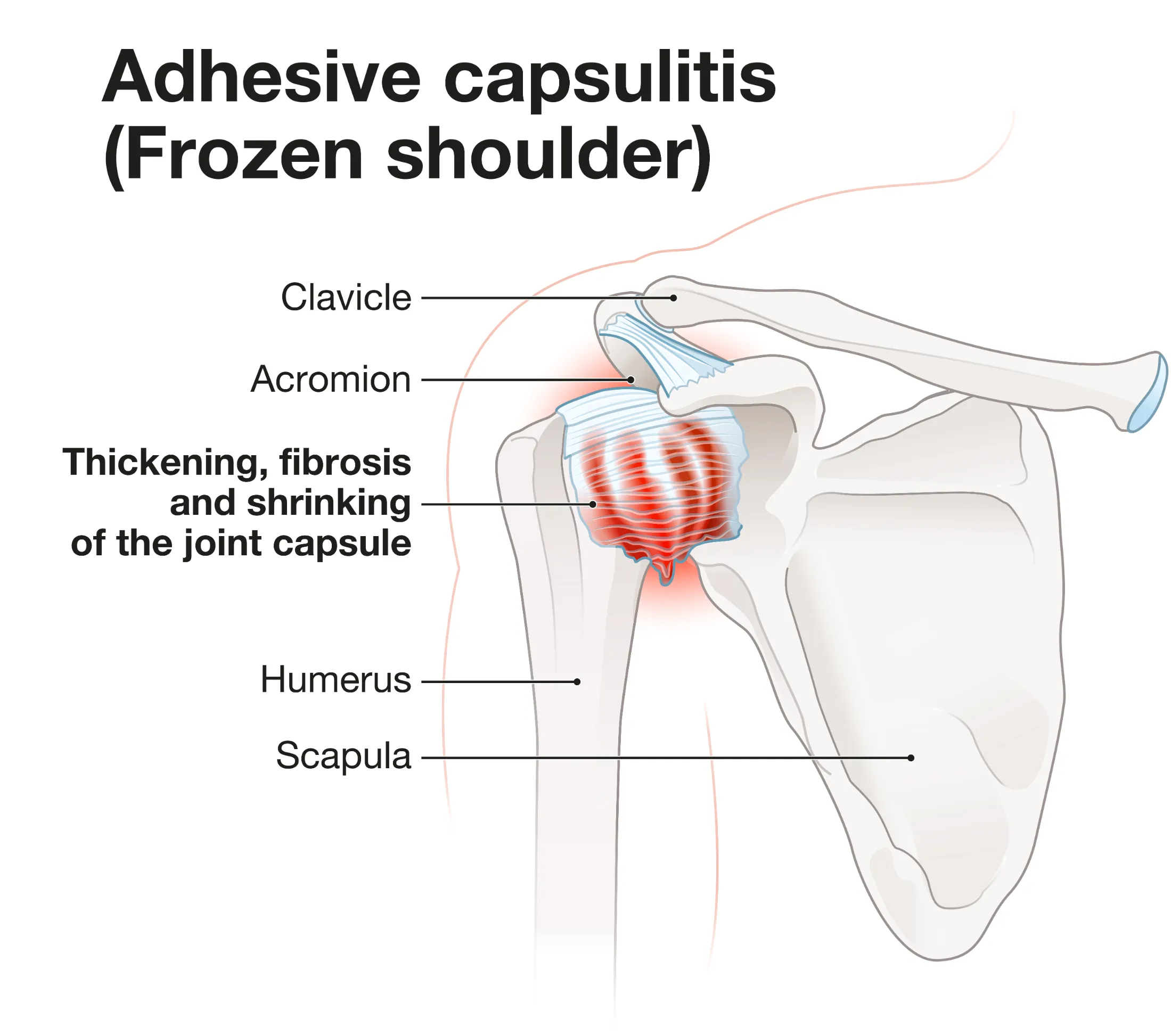
This patient had developed adhesive capsulitis, more commonly known as frozen shoulder. It gets that name from the fact that the condition causes the shoulder to “freeze up” after a period of intense pain.
A frozen shoulder will eventually “unfreeze,” but that process can take anywhere from 1–3 years. Fortunately, the team at Amber Hill Therapy Centers can help you manage your symptoms and facilitate a more efficient recovery.



What Causes Frozen Shoulder?
The condition develops when the capsule of connective tissue that wraps around your shoulder thickens and tightens, restricting the joint. However, researchers aren’t entirely clear why this happens. Certain factors can increase your risk:
- Being a woman between the age of 40 and 60 years old
- Having certain diseases, including diabetes, thyroid conditions, or cardiovascular disease
- Immobilizing your shoulder after an injury or surgery
Understanding the Three Phases of Frozen Shoulder
One reason frozen shoulder recovery can take so long is that the condition progresses through three distinct phases, each with its own set of symptoms and concerns. Here’s what you need to know about each one:
❄️ Freezing Phase
Duration: Anywhere from six weeks to nine months
This initial stage is marked by increasing pain and stiffness in the shoulder. During this phase, we focus on maintaining your shoulder’s range of motion to help reduce stiffness and improve comfort.
Symptoms:
- A gradual onset of pain that worsens with movement
- Increased stiffness in the shoulder
- Pain is often worse at night, disrupting sleep

Physical Therapy and Frozen Shoulder: What You Need to Know
Physical therapy plays an essential role in helping you manage frozen shoulder symptoms at all three stages. Our team will work with you to develop a comprehensive treatment program, pulling from a range of different techniques based on your current symptoms:
Acute Pain Management
We’ll help you manage shoulder pain (especially in the freezing phase) with techniques such as dry needling, Kinesio taping, hot and cold therapy, and more.
Manual Therapy
Various hands-on techniques can gently mobilize the shoulder joint, improve joint capsule movement, and reduce pain.
Mobility Exercises
Targeted exercises and techniques help improve your shoulder’s range of motion in all directions, gradually restoring your ability to reach, lift, and rotate your arm.
Strengthening Exercises
Strengthening the muscles surrounding the shoulder joint enhances stability and supports improved function.
Management Strategies
Understanding frozen shoulder is an integral part of managing it. We’ll help you navigate the difficulties of the condition, including identifying which stage you’re in and providing you with home exercises to help alleviate your symptoms.
Ready to Break Free From the Icy Grip of Frozen Shoulder?
If you suspect you have frozen shoulder, schedule an appointment at Amber Hill Therapy Centers. Physical therapy is essential for managing the condition in all three phases, and the earlier you can begin treatment, the better your outcomes will be. Our team is here to help you manage pain, restore mobility, and understand your shoulder’s movement patterns.
Don’t let frozen shoulder hold you back. Call us today to schedule your initial evaluation!
Exercise of the Month
Shoulder Internal Rotation Stretch
(Shoulders, Rotator Cuff)
Start by standing up straight holding a towel behind your back with one end over your shoulder and the other by your lower back. Grab the bottom end of the towel with your hand on the side you want to stretch and gently pull up on the towel with your other hand. Hold for 30 seconds. 2 Sets, 1 Rep. (Materials needed: towel)
Dive into Spring Gardening Without the Back Pain
As flowers start blooming and southern gardens come alive, don’t let back pain hinder your green thumb efforts this spring. At Amber Hill Therapy Centers, we’re committed to helping you get back in your garden by addressing your back pain concerns.
Our expert assistance ensures you:
- Find relief from pain, preparing you for those gardening sessions.
- Restore your mobility and strength to plant, prune, and pick with ease.
- Share gardening tips and fresh produce with friends and family without the shadow of back pain.
Our treatments are crafted for your distinct needs. This spring, turn a new leaf without pain—connect with us today and let your wellness blossom alongside your garden!


Recipe of the Month: Anti-Inflammatory Turmeric Smoothie
Anti-inflammatory, omega-3 rich — perfect for joint health and shoulder recovery.
Ingredients
- 1 cup frozen mango chunks
- 1 banana
- 1 cup almond milk
- 1 teaspoon ground turmeric
- 1/2 teaspoon ground ginger
- 1 pinch black pepper
- 1 teaspoon honey
Instructions
- Blend: Add 1 cup unsweetened almond milk, 1 cup frozen mango chunks, 1 banana, 1 teaspoon ground turmeric,1/2 teaspoon ground ginger, 1 pinch black pepper, and 1 teaspoon honey to a blender. Blend on high for 1 minute until smooth.
- Serve: Pour into a glass and enjoy immediately. Add ice if desired.
Sources:
https://www.ncbi.nlm.nih.gov/pmc/articles/PMC7031440/